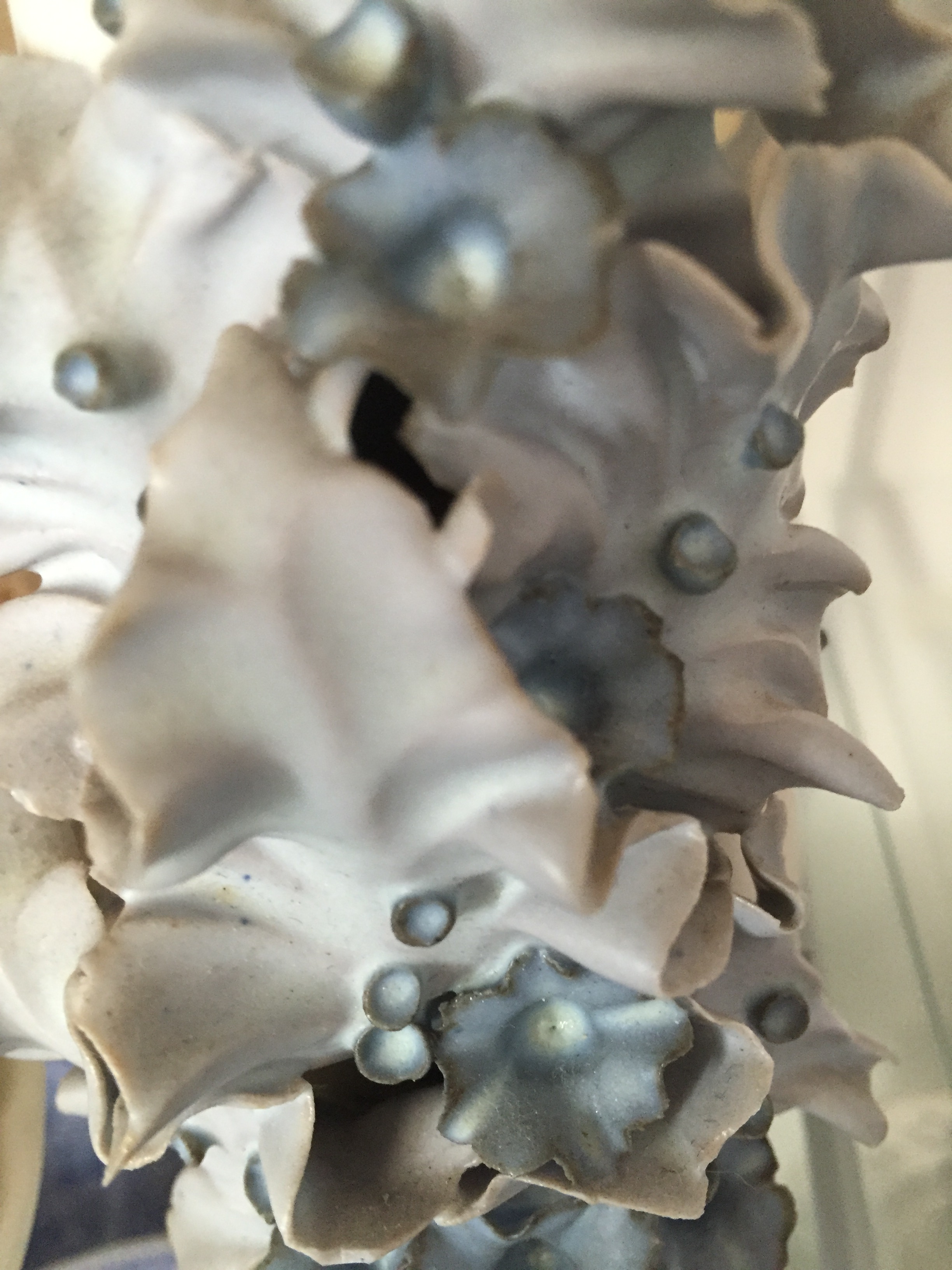
How hard is it sometimes to convey what’s in your head in a way that remotely resembles those thoughts!!!!!
Writing with eyes on the screen can get you tangled. Words clash awkwardly, as hard to fit together as mismatched puzzle pieces. I often find myself at the end of a convoluted sentence with too many bits that say exactly the same thing in different ways. Eventually I cut out what’s redundant, but I am not always left with something that sings or pops.
There is a sentence that’s bothering me at the moment. I played and played with it yesterday, and last night I finally thought I nailed it. But overnight, my brain must have been doing its thing – subconscious working without telling you what she’s up to – and this morning I found myself thinking about that sentence again. I realised it’s still overworked. I am going to return to it, and make it simpler.
But the other thing I need to do, and keep in mind as I write, is to write less with eyes on the screen, and stop every now and then to close my eyes and visualise, imagine, create, breathe.
What am I actually trying to say? What is the best way to say that. Better still, what is the simplest way to say it?
George Orwell was on to something when he wrote about keeping language simple. Reading these simple rules reassures me when I worry my language is too plain, or too boring.
1. Never use a metaphor, simile, or other figure of speech which you are used to seeing in print.
2. Never use a long word where a short one will do.
3. If it is possible to cut a word out, always cut it out.
4. Never use the passive where you can use the active.
5. Never use a foreign phrase, a scientific word, or a jargon word if you can think of an everyday English equivalent.
6. Break any of these rules sooner than saying anything outright barbarous.
I have a tendency to be over-verbose. I tend to want to squeeze every good point into a sentence and try to get it to flow seamlessly. But it often does not work. Sometimes it’s a disaster. The only way to fix is to cut, relinquish, abandon, delete.
This is painful. I hate saying goodbye to words with which I’ve formed an attachment. It’s like cutting ties with a dear friend. Before I let them go, I already miss them. It’s that same thing you have when sorting through your overstuffed wardrobe, knowing you have to cull. So hard to throw out that old favourite, even though you know you will never, ever, wear it again.
So the old advice, Kill Your Darlings, is somewhat comforting. I often think it as I push redundant or just plain awful prose over a cliff and watch it break into smithereens.
 The Life Journey Project